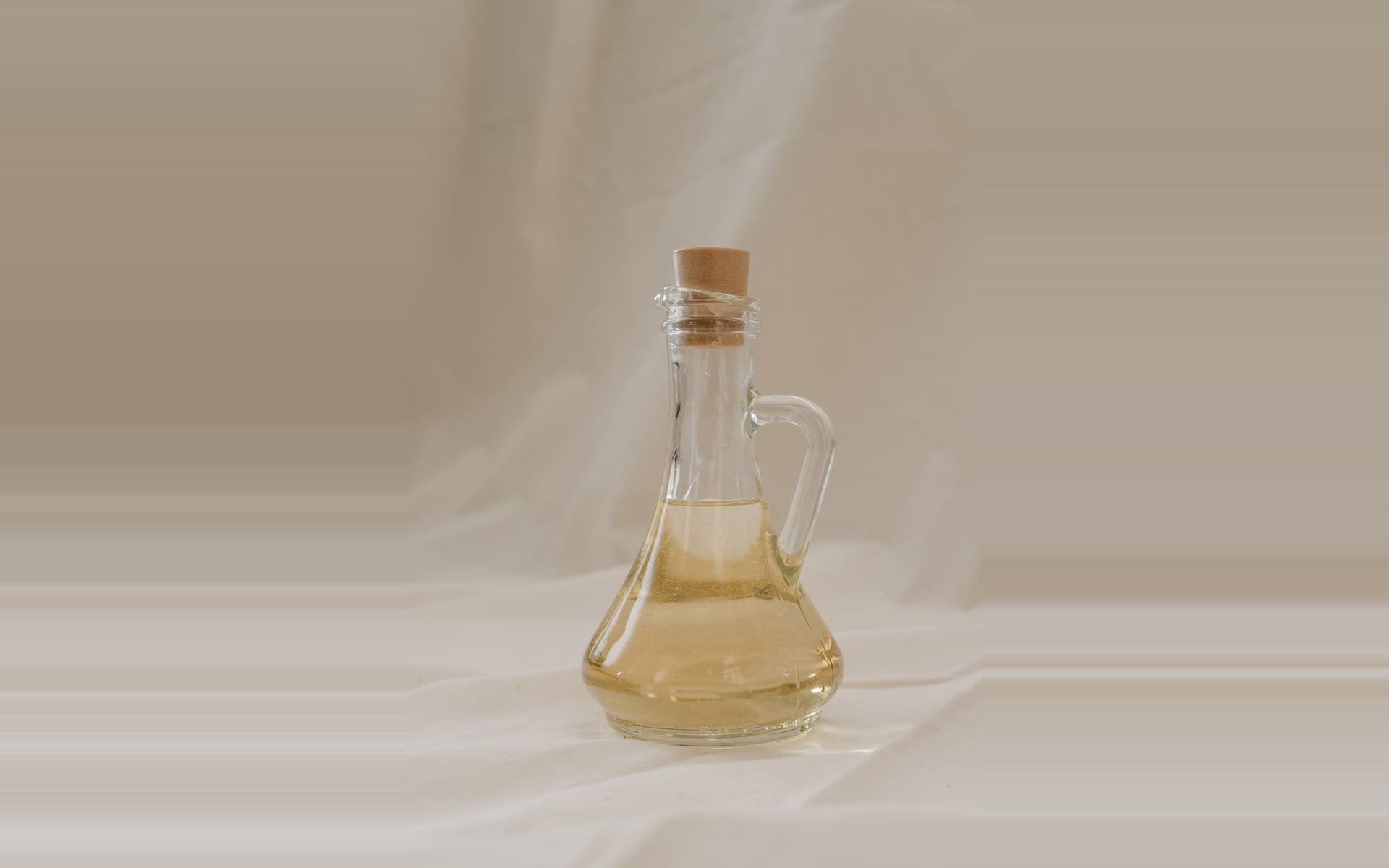
Macadamia oil smokes at about 210°C, carries roughly 80% monounsaturated fat, which is the highest of any common edible oil, and holds up under heat better than almost anything else in the cupboard. It also costs more than the oils it competes with, for a reason that becomes obvious once you press some yourself. Those three facts decide where it belongs in a kitchen, and where using it is simply expensive.
We press our own from kernels grown on the farm, so we have watched a lot of it turn into supper. Our cold-pressed oil gets used here almost daily, and there are still dishes we would not waste it on. This is the practical version, with the numbers behind it.
What is actually in the bottle
Macadamia oil is unusual among food oils, and not only for the monounsaturated total. It carries a lot of palmitoleic acid, an omega-7 fat that most cooking oils have in trace amounts at best.
| Component | Macadamia oil | For comparison |
|---|---|---|
| Monounsaturated fat | About 80% | Olive oil roughly 74% |
| Oleic acid (omega-9) | Roughly 50 to 60% | The same fat that dominates olive oil |
| Palmitoleic acid (omega-7) | Roughly 16 to 22% | Almost absent from olive, canola and sunflower |
| Linoleic acid (omega-6) | Around 1 to 3% | Sunflower oil is over 60% |
| Saturated fat | About 13% | Coconut oil is above 80% |
Those ranges come from published analyses of macadamia oil rather than from a marketing brochure, and they move with cultivar and season. The review worth reading if you like this sort of thing is Chemistry and Functionality of Cold-Pressed Macadamia Nut Oil in Processes, which pulls the composition work together in one place.
The low omega-6 figure is the one that deserves more attention than it gets. Most South African kitchens run on sunflower oil, which is largely linoleic acid. Swapping the frying oil is one of the few dietary changes that requires no willpower at all. Our post on what macadamias do for you goes through the nutrition of the whole nut, including the parts marketers skip.
Why it survives heat that ruins other oils
Fats break down under heat roughly in order of how many double bonds they carry. Polyunsaturated fats go first, monounsaturated fats hold on much longer, and saturated fats are the most stable of all. Macadamia oil is 80% monounsaturated with very little polyunsaturated fat left to oxidise, which is why it behaves so well in a hot pan.
This has been measured rather than assumed. Kochhar and Henry tested eight culinary oils by the Rancimat method, which times how long an oil resists oxidation at elevated temperature, and macadamia came out the most stable of the set, ahead of avocado, almond, hazelnut and grapeseed. Later work on cold-pressed nut oils put macadamia's induction time at 7.38 hours, again at the top of its group.
In a domestic kitchen that translates into a wide margin for error. At 200°C in the oven you are 10 degrees below the smoke point and the oil is fine for the full 35 minutes. Do the same with unrefined sunflower oil and you are cooking past its limit for the whole roast.
Cold-pressed, refined, and what a litre really costs
Cold pressing means the kernels are crushed mechanically without added heat, so the flavour compounds and the natural antioxidants stay in the bottle. Refined macadamia oil is filtered and neutralised, which raises the smoke point a little and takes most of the character out. For cooking at home, cold-pressed is the one worth buying, because you are paying for flavour you can taste.
Here is the part that explains the price. Macadamia kernel is about 69 to 76% fat, but a cold press only recovers a portion of it, typically 30 to 40% of the kernel weight as oil. Run those numbers for a litre, which weighs about 910 g, and you need somewhere near 2.5 to 3 kg of kernel to fill one bottle. At any kernel price you care to plug in from our price guide, the maths stops being mysterious. Cheap macadamia oil is either blended, solvent extracted, or not what it says on the label.
One quiet industry detail worth knowing as a buyer: much of the world supply of macadamia oil is pressed from kernel that did not make a premium visual grade. A slightly discoloured kernel is nutritionally identical to a perfect one, and once it is oil, nobody can tell. That is a genuinely good use of the crop, not a compromise. Ask a seller what goes into their press and see whether the answer is a real one.
Where macadamia oil earns its place
Six uses where we reach for it without thinking twice.
- Searing steak and lamb chops. The high smoke point means the crust forms before the oil starts complaining. This is the single best argument for keeping a bottle.
- Braai work. Brushing vegetables, halloumi or fish over hot coals, where sunflower oil scorches and olive oil turns bitter.
- Roasting vegetables at 200°C. See the method below. The buttery note survives a long roast in a way olive oil does not.
- Baking, in place of butter. Use about three quarters of the butter quantity by weight and reduce the other liquid slightly. Carrot cake and banana bread take it particularly well.
- Mayonnaise and dressings. Its mild flavour lets the vinegar and mustard lead, which is exactly what an assertive olive oil refuses to do.
- Popcorn. Not a serious culinary argument, but it is the best popcorn oil we have found and worth the indulgence.
Macadamia oil roast vegetables
You need: 1 kg mixed root vegetables in 3 cm pieces, 3 tablespoons cold-pressed macadamia oil, 2 teaspoons coarse salt, a head of garlic halved crosswise, a handful of macadamia halves. About 45 minutes, serves four.
- Heat the oven to 200°C, comfortably inside the oil's working range.
- Toss the vegetables in the oil and salt until every surface is coated, then spread them out with space between the pieces. Crowding steams them.
- Roast 25 minutes, turn once, and add the garlic halves cut side down.
- Add the macadamia halves for the last 10 minutes so they toast instead of burning.
- Squeeze the soft garlic over the tray. A last teaspoon of raw oil off the heat carries the nutty flavour through.
Where it is a waste of money
Deep frying is the obvious one. It performs well and you will not scorch it, but filling a pot costs more than the chips are worth. Keep a cheaper stable oil for that job.
It is also the wrong choice when you actively want olive oil's bitterness and pepper, which is most Mediterranean cooking, a tomato salad, or anything finished with good bread. Macadamia oil is mild by design. In those dishes the mildness reads as absence.
And it is wasted in a long marinade with strong aromatics. The delicate nutty character disappears under garlic, chilli and soy within an hour, so use a plain oil to carry the marinade and save the macadamia for the pan.
The skin and hair question, answered honestly
Macadamia oil turns up in a lot of cosmetics, and the usual explanation is that its palmitoleic acid is also found in human sebum, so it absorbs quickly and feels less greasy than most plant oils. The chemistry behind that claim is real. It is a genuinely emollient oil.
What is thinner than the marketing suggests is the clinical evidence for the bigger promises around ageing and repair, which mostly rests on small studies and long tradition. If you like how it feels on your skin, that is a perfectly good reason to use it. Just be aware that culinary oil is bottled for a kitchen rather than for a bathroom shelf, so keep the two bottles separate and do not put a cooking oil anywhere near a nut allergy.
Storing it so it lasts
The enemies are the same ones that ruin the nuts themselves: air, warmth and light. Dark glass, a cupboard away from the stove, lid closed properly. Sealed, expect roughly a year from bottling. Opened, aim to finish it in about three months, which is easier than it sounds once you start searing with it.
The rancidity test is your nose. Fresh macadamia oil smells faintly of the nut, slightly sweet, almost like shortbread. Rancid oil smells sharp and waxy, closer to old crayons or paint. Heat will not fix it and neither will garlic. Our storage guide for the nuts uses the same test, because it is the same oil, only still inside the kernel.
If you want to try ours
We press ours from our own Mpumalanga kernels, first cold press, and bottle it in dark glass for the reason above. You can see the range on our macadamia products page, and if you cook professionally or need it in volume, tell us what you are making and we will quote accordingly. If you are about to deep fry with it, we will probably talk you out of it first.